
Structure and Chronology of an urban settlement in the Murghab alluvial fan.
| 2023 | 2024 | 2025 |
Starting point and relevance
Togolok is situated approximately 60 km north-east of the present-day district city of Mary and 11 km south of ancient Gonur in the south-eastern part of the Karakum desert. (For the Society’s Gonur project see under “completed projects”.) Other than today, this region, which drew its water supplies from the over 3,000 square km large delta of the river Murghab, was densely populated during the Bronze Age. This area, also known as Margiana, formed the South-Turkmenian center of the BMAC (Bactria-Margiana Archaeological Complex) that stretched from here over Southern Uzbekistan all the way to Northern Afghanistan. This up until now still largely unknown early advanced civilization with its urban phase between 2300 and 1600 BC and stood in close contact with Iran, Mesopotamia and the Harappa Culture.
The settlement cluster of Togolok in southern Turkmenistan consists of about 30 sites of different sizes, making it one of the largest and most important places of the BMAC or Oxus Civilisation in Central Asia. The settlement cluster was inhabited from about 2300 to 1700 BCE. The most recent settlement traces indicate a contemporary use of the site by nomads migrating from the north and thus promises to provide information on the end of the BMAC. The site has been known since the work of V.I. Sarianidi, who had almost completely uncovered a walled enclosure at Togolok 21 and in the southern mound of Togolok-1. Additionally, he laid out a deep sounding at the northern mound of Togolok-1. The excavations begun in 2014 by B. Cerasetti have already provided important insights into the interaction of sedentary and nomadic population groups at the end of the Bronze Age.
.
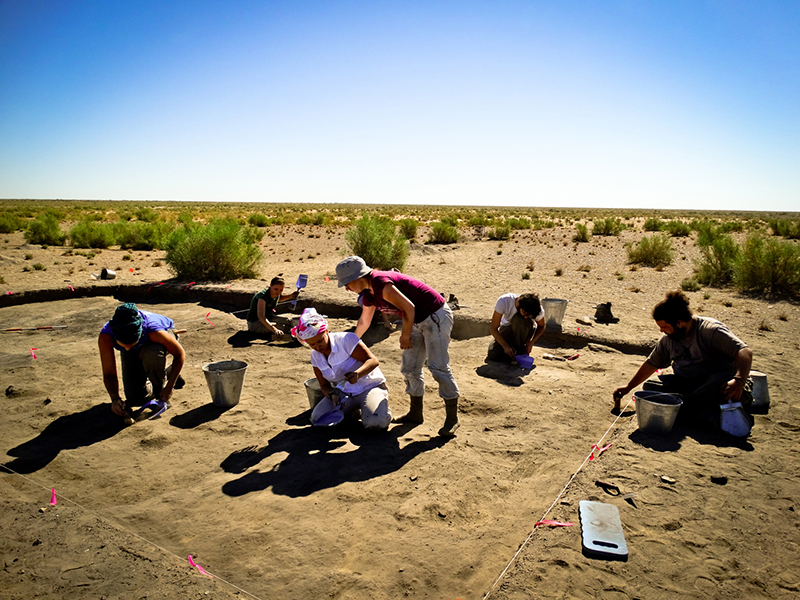
The Togolok-1 trench in 2015
Goals
• Urbanism of Settlement Cluster: Analysis of the structure of the settlement cluster: urban agglomeration of contemporary sites or changing focus of shifting towns at relatively short intervals?
• Chronology of the site and the entire BMAC culture as well as reconstruction of a
detailed pottery development on the basis of a fine-stratigraphic sequence accompanied by C14 data.
• Architecture: Large-scale investigation of architectural features.
• Cohabitation of Sedentary Population and Pastoral Nomads during the Late Bronze Age.
The methods to be used for this are:
• Excavations, initially at the largest site, Togolok-1 north, in four trenches to obtain stratigraphic sequences and architectural features.
• Geophysical prospections
• Survey and topographic documentation of the entire settlement cluster.
• Remote sensing by satellite imagery
Partners of the Society
Prof. Dr. Mirko Novák, Institute for Archaeological Sciences, University of Bern, Switzerland.
Dr. Barbara Cerasetti, ISMEO – The International Association for Mediterranean and Oriental Studies, Rome, Italy.
TAP - Togolok Archaeological Project
https://togolokarchaelogicalproject.wordpress.com/togolok-project/
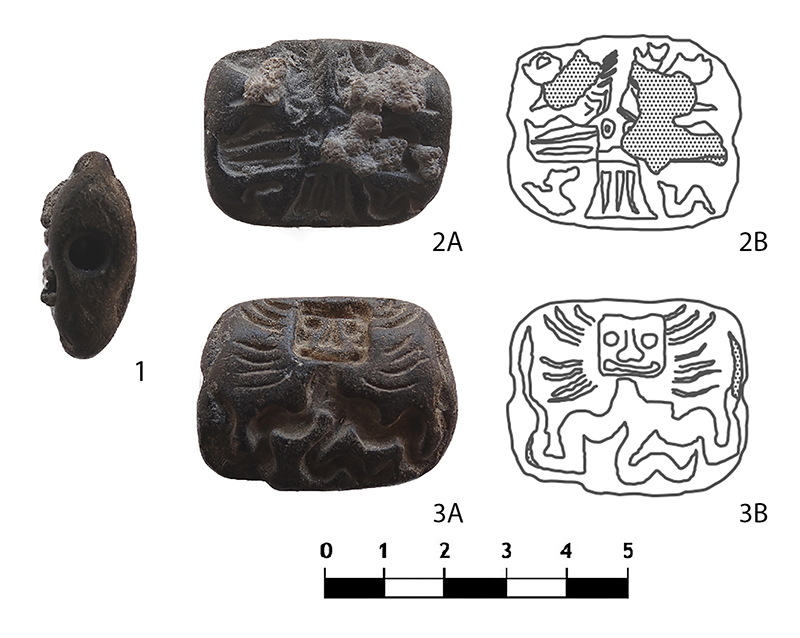
A black chlorite amulet or stamp seal from Togolok-1. The engraved decoration represents a bird of prey with possible female features surrounded by two snakes located between her wings on one side (2A-2B) and a humanoid face with a serpentine body on the other (3A-3B) (Photos: L. Forni).
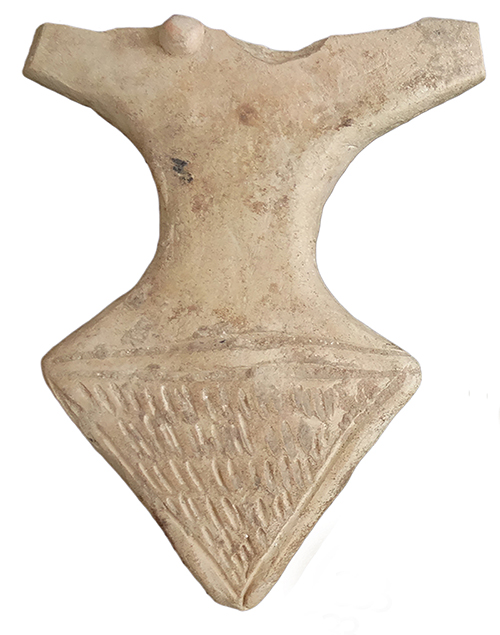
A flat violin-shaped female terracotta figurine (Photo: L. Forni).
TAP Project: 2023 field campaign of the Joint Archaeological Mission at the Bronze Age Settlement of Togolok 1 (southern Turkmenistan)
B. Cerasetti (Freie Universität Berlin; ISMEO), M. Novák (Universität Bern), N. Amano (Max-Planck-Institut für Geoanthropolgie, Jena), R. Arciero (Universiteit Leiden), T. Billings (Max-Planck-Institut für Geoanthropolgie, Jena), L. D’Ippolito (ISMEO), S. Dvorak (Universität Bern), C. Giardino (Università del Salento), N. Guedeau (Aix-Marseille Université), C. Kny (Universität Bern) K. Langenegger (Universität Bern) According to the agreement with the Turkmen Ministry of Culture, the joint team from ISMEO, the University of Bern, and the FU Berlin, conducted a 4-week field campaign at the Bronze Age site of Togolok 1, with the support of The Society for the Exploration of Eurasia among the main sponsors (Fig. 1).
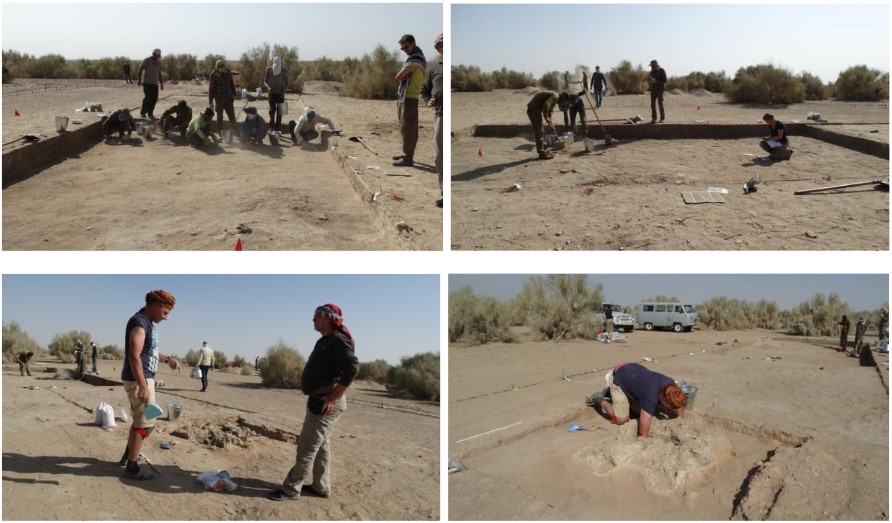
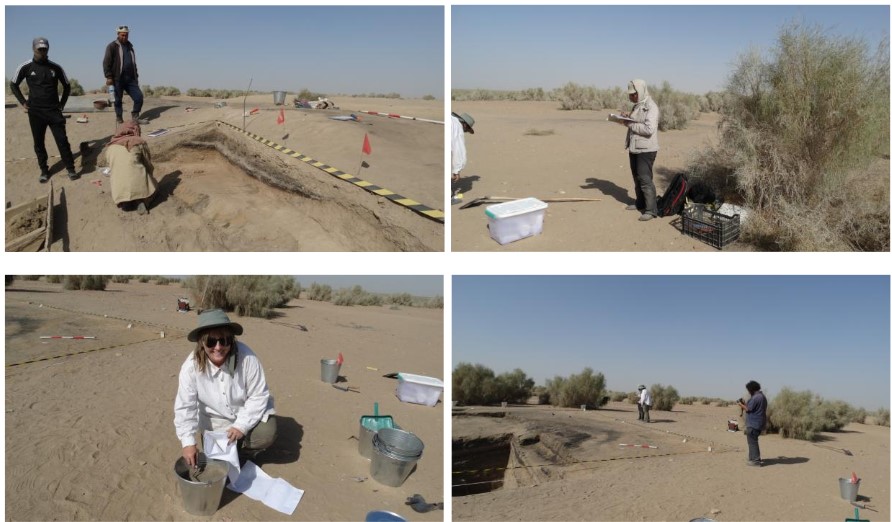
Fig. 1. The team at work during Togolok 1 excavation
Togolok 1 is located at the southernmost end of the eastern section of the Murghab alluvial fan and is composed of two mounds, a large northern ‘tepe 1’ and a small lower ‘tepe 2’ (Fig. 2).
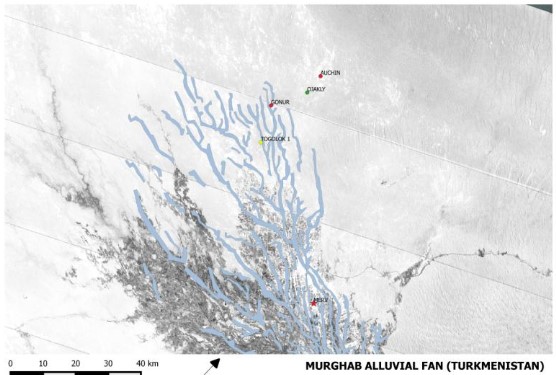
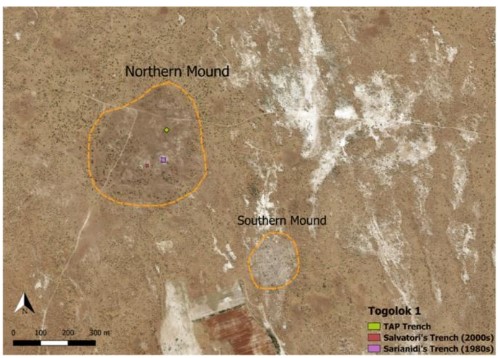
Fig. 2. Togolok 1 along the main fluvial ridges and its location respecting the Bronze Age sites of Gonur, Ojakly, and Auchin (above). The two main mounds of Togolok 1 (below) (map by R. Arciero).
In 2023, three main trenches were opened respectively in the upper part of the mound (Trench 1), in the trench already excavated by V.I. Sarianidi in the ‘80s in the south-eastern area (Trench 2), and in the south-western area of the mound (Trench 3) (Fig. 3).
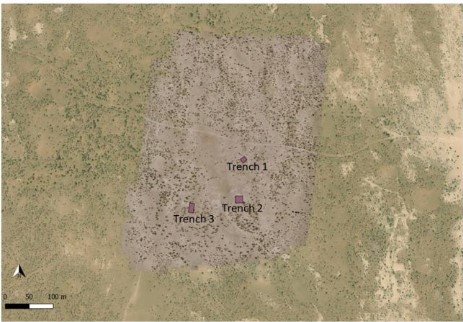
Fig. 3. Maps of Togolok 1, with the location of the main trenches (map by R. Arciero)
TRENCH 1 Trench 1 was excavated by the TAP team in 2014, 2015, and 2018, and in 2023 the trench was enlarged to the west. The excavation revealed the presence of walls in pakhsa and artificial platforms (floors) related to the 3- phases occupation of the semi-mobile camp, previously excavated. The large black organic layer rich in charcoal with numerous seeds, dung inclusion, along with overfired pottery and bones, and the ash deposit which characterized the entire trench, were interpreted as repeated human living and burning activities (Fig. 4).
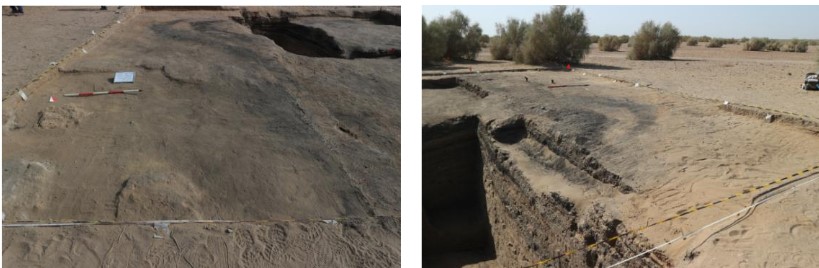
Fig. 4. Wall structures and artificial platforms (floors) on the southwest part of the trench (left). Human living and burning activities in Trench 1 (right).
In addition, a sequence of reddish platforms/floors, with overfired clay and pottery on top, was uncovered. Because of the bad preservation, it was hard to distinguish what these features might represent, although to the east a part of a structure could be interpreted as an air conduit for kitchen purposes (Fig. 5).
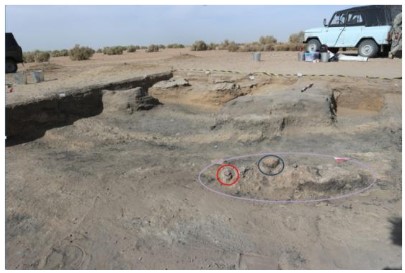
Fig. 5. Structure with possible evidence of an air conduit (red circle); in the blue circle, the presence of overfired clay
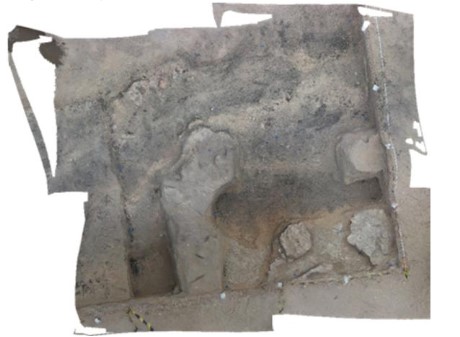
Fig. 6. 3D model of the last phase uncovered in the south sector of Trench 1.
All in all, the 2023 fieldwork season revealed in Trench 1 the presence of structures (i.e., walls and floors) in two sectors of the trench, which belong to the same phase of occupation (Fig. 6). The ash deposit and black 4 organic layer could be interpreted as repeated human activities (at least 3 phases), more recent than the structures below (walls and floors), which were already in place at that time.
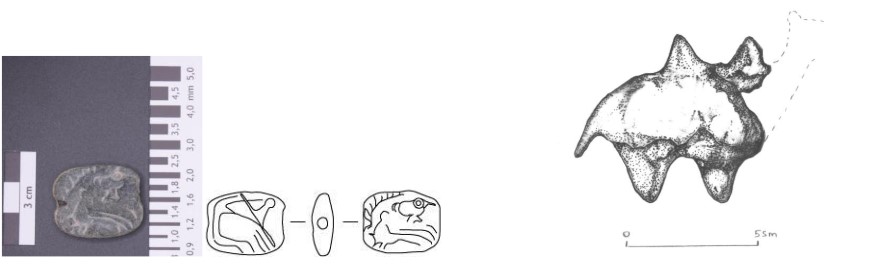
Fig. 7. Chlorite amulet (left); zoomorphic terracotta camel figurine from Trench 1 (right).
The analysis of the special finds (e.g., bronze objects, beads, and fragments of figurines) suggests a GKC (Greater Khorasan Civilization) occupation phase. However, these items were uncovered in the same organic deposit, that was connected to the semi-mobile occupation identified in the season 2014-2015. In this same context, a zoomorphic figurine, likely representing a camel, was uncovered, which finds a parallel with similar figurines in the Andronovo-related site of Ojakly. This item clearly confirms the cultural relation of the context to the previously excavated semi-mobile camp and the social, cultural, and economic complexity of the last inhabitants of the settlement (Fig. 7).
TRENCH 2
The main purpose of reopening Trench 2 was to have available an immediate stratigraphic and chronological sequence. Through a well-controlled stratigraphic excavation, the new section allowed the analysis of the structural and ceramic sequence and the collection of fresh samples for radiocarbon dating. Although Sarianidi was reported to have reached the sterile soil, which was supposed to be located about 2.5 meters below the surface, the new excavation demonstrated the continuation of the archaeological deposit, since some in situ pottery fragments were visible one meter below the bottom of the old trench (Fig. 8).
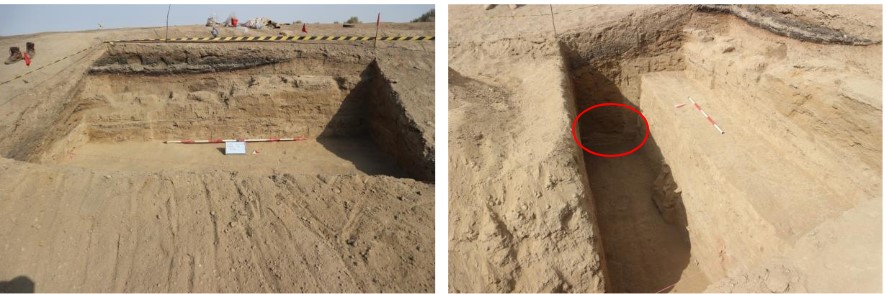
Fig. 8. Northern section of Trench 2 with the structural sequence (mudbrick structure and clay platform) (left). Western section: Pottery remains are located under the oldest cutting of the previous trench (red circle) (right).
At the end of the excavation, part of a large mud wall with an entrance was uncovered, probably part of the building already excavated by Sarianidi. In the trench, the probable burial of a child, less than one-year-old, was found, without a preserved context of discovery (see below). The excavation returned some very interesting special items, such as three anthropomorphic figurines, one spindle whorl, and some stone tools (Fig. 9).
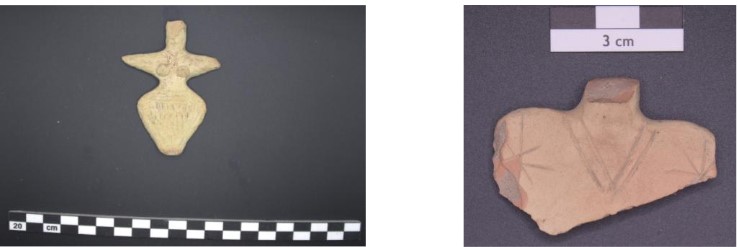
Fig. 9. Anthropomorphic terracotta female figurines from Trench 2.
TRENCH 3
Trench 3 was opened close to the south-west living quarter of the main mound to shortly reach a robust chronological sequence, both based on radiocarbon dates and pottery collection from a well-controlled stratigraphical excavation, as an anchor point to revise the GKC chronology. In the northernmost part of the trench, the archaeologists identified the first occupation layers of the excavated area. Below a sequence of artificial platforms of open courtyards, drilled by post-holes, with the presence of fireplaces and pottery pits, part of a two-phase building, composed of at least two rooms, was discovered, probably connected to the same building excavated by V.I Sarianidi to the east (Fig. 10). Unfortunately, the surface was intensively eroded and only fragmentary burnt bricks of the previous structure were preserved, such as a probable oven installation. The more recent phase consisted of the floor remains of the two rooms and the walls have not been preserved in elevation. The structure was limited to the south by a wall with a connected oven. A second wall limited the corner of the second room in the north-westernmost part of the trench. Two more compact layers characterized the northern part of the trench, where the presence of a large fireplace with an intense ash concentration and a large pit with a sandy fill, which limited one of the two rooms, were excavated. Other structures, such as the eroded surface of a clay brick wall, were identified. Under the fill of the room, the archaeologists identified a rectangular-shaped wall, composed of compact clay. Along the southern part of the wall, another fireplace was located, limited by a second wall and a probable oven.
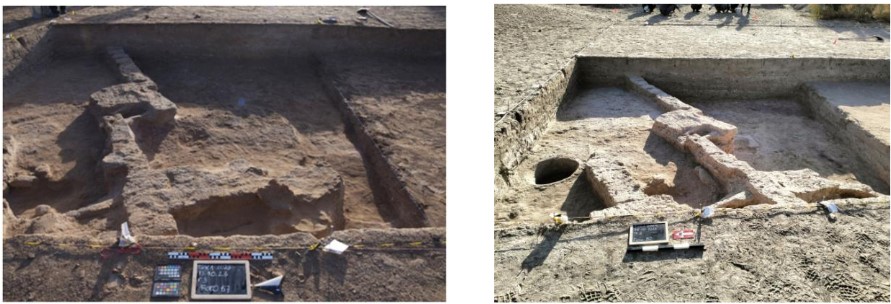
Fig. 10. Overview of the northernmost part of Trench 3 during the excavation.
Numerous special finds were detected, such as one carnelian bead, one stone amulet, and one bronze nail (Fig. 11).
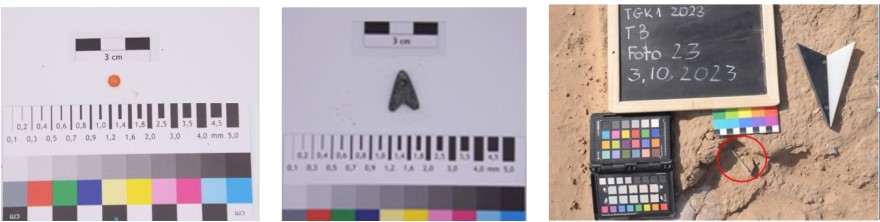
Fig. 11. Special finds from Trench 3.
In the second oldest phase of the building, a fireplace occupied the internal part of the westernmost corner of one of the two rooms, the use of which was discontinued at a later time. After reaching this foundation phase, the archaeologists proceeded with the excavation of the area surrounding the perimetral wall, below which a vessel container was located inside the floor (Fig. 12). At the same level, under another fired floor level, the archaeological deposit was characterized by very sterile sandy soil, where some animal jawbones were found. In the last and only partially excavated very compact surface level, another fireplace was located. This layer was interpreted as a floor of a large courtyard and corresponds to the oldest occupation level in Trench 3, reached by archaeologists.
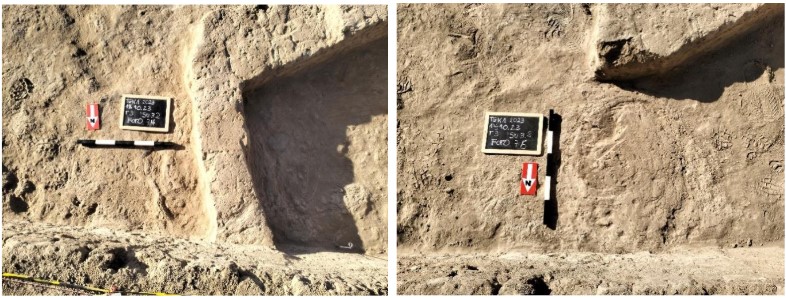
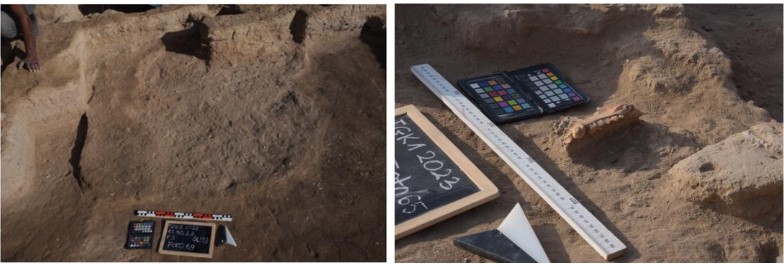
Fig. 12. The perimetral wall with the underneath pottery vessel (left). Sterile sandy layer with some animal jawbones (right).
A rectangular-shaped pottery kiln with a diameter of 1 m, which belongs to the final occupation phases, was identified in the southern part of the trench. A large amount of ceramic slags were found in the filling of the kiln, which further testifies to its use for ceramic production (Fig. 13).
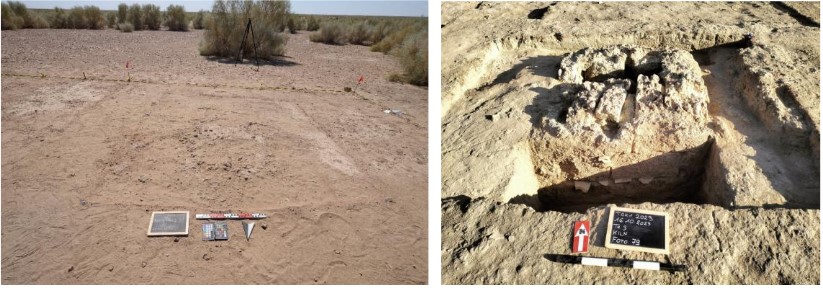
Fig. 13. Southern area of Trench 3 with the location of the pottery kiln, before and after the excavation.
METAL INVESTIGATION
During the 2023 excavation season in Togolok 1, a campaign of archaeometallurgical investigation was carried out to examine systematically and exhaustively the metal finds from the site. More than 40 metal objects were 7 recovered, plus more than 20 items related to metallurgical activity, such as prills and slag. The analyses to which the metal objects have been subjected are aimed at determining the elementary composition of the alloys used in the production of the artefacts, with particular attention to the content of the main elements, such as copper, tin, arsenic, and lead. This will allow us to determine the type of ore from which the copper was smelted, whether it was a sulfide or an oxide, or a carbonate. In addition, future isotope analyses will find out the area of mineral copper supplied by ancient local communities. Through the scanning electron microscope analysis, it will be possible to characterize the microstructure of the find, to understand the mechanical processes that were connected with the object production (Fig. 14). The characterization of the structural details using a stereomicroscope was also carried out on some of the objects, which provided data on production techniques or traces of use and useful details for the reconstruction of ancient metallurgical processes. One of the aims of archaeometallurgical research is the reconstruction of the operational chain, that is, the sequence of operations that took place at the site to obtain the production of metal objects.
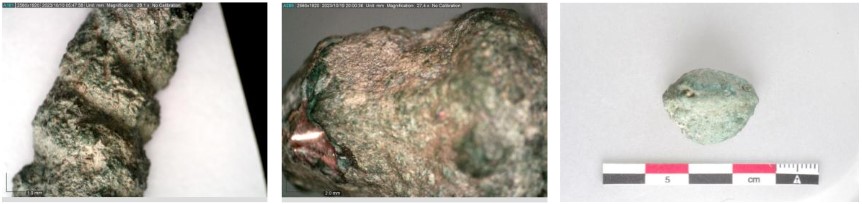
Fig. 14. Armband (28x) (left); sprue: microscopic detail (27X) (middle); sprue from Togolok 1.
A first preliminary study of the Togolok 1’s finds made it possible to ascertain the presence of a flourishing metallurgical activity at the Bronze Age settlement, and therefore the existence of metal workshops devoted to the production of metal objects, as suggested by the metal indicators in Togolok 1’s area. They were used by the members of the community and, perhaps, they were also traded to other communities. A clear indication of this activity is the discovery of many prills, drops of molten copper alloy that escaped from the crucible during casting, and were scattered on the ground surface. In addition to the prills, casting waste and residues related to the melting activities were also recovered. Of particular interest is a fragment of a sprue (Fig. 14), which demonstrates the existence of bivalve casting moulds, although, at the moment, they were not found. The predominant presence of ornamental objects (pins, cosmetic wands, and bracelets) constitutes an indication of a possible production in the Togolok 1’s workshops, and they also attest to the richness of the local community. Since the Bronze Age Margiana was devoid of metal ore deposits, not only tin but also copper had to be imported. Probably part of the used metal could have been the result of the recycling of old bronze objects. However, recent isotopic studies indicate that the use of copper recycling in Central Asia seems to be less practised than was supposed in the past. Until the analyses on metal objects are carried out, it is only possible to hypothesize the provenience of the raw materials from the northern steppes, according to the major studies on the argument.
ARCHAEOBOTANICAL AND ZOOARCHAEOLOGICAL INVESTIGATION
The archaeobotanical investigation at the site testifies one more time to the presence and the abundance of the same plant species previously recovered, expecially from Trench 1, and the same mixed agro-pastoral economy conducted by the local community. All bone fragments were examined for natural, animal, and anthropic modifications, including weathering, abrasion, burning, and oxidation. Bone surface modifications resulting from anthropic (i.e. butchery or tool manufacture), carnivore (pits, punctures, chewing), rodent (gnawing), or plant (root etching) actions were identified. Ovo-caprines dominate all the assemblages, meanwhile, cattle represent around 11% (Fig. 15). Partially complete horncore fragments (Fig. 16) suggest that both sheep and goats are present at the site. Preliminary observation suggests that there is a predominance of younger caprine individuals in Togolok 1, as evidenced by deciduous dentition and numerous unfused skeletal elements.
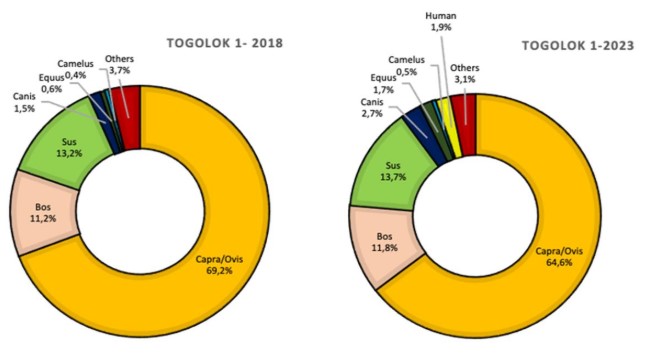
Fig. 15. Frequency of the different taxa identified in the Togolok 1 assemblages.
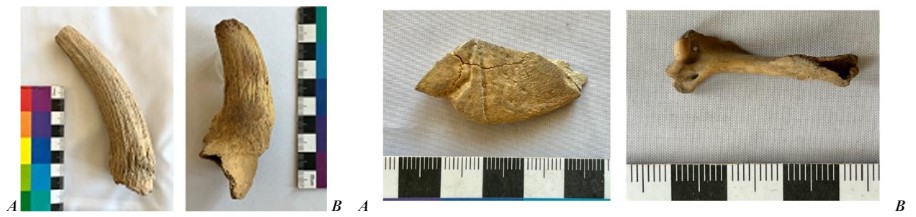
Fig. 16. Goat (A) and sheep (B) horncore (left); turtle plastron fragment (A); squirrel humerus (B) (right).
By contrast, pigs/boar are not so common, dogs/jackals are rare, and equids/donkeys/onagers are present in a much lower percentage. Interesting is the presence of camel (three-tooth fragments that most likely represent a single individual), as well as birds, squirrels, mice, rabbits/hares, and turtles (Fig. 16). Large evidence of burning and butchery, such as cut marks and chop marks recorded in numerous bone fragments in the Togolok 1 assemblages, suggests the consumption as food. Preliminary data shows a high frequency of butchery marks in caprine long bones, specifically in or near articular facets, suggesting disarticulation of the sheep/goat carcass into defined meat units. For example, Fig. 17A shows a caprine ulna with multiple cutmarks on the base of the olecranon process, just above the trochlear notch suggesting disarticulation of the humerus (i.e., removal of the lower front leg). A suid (pig/boar) maxilla with at least five transverse cutmarks on the alveolar border could be taken as evidence for skinning (Fig. 17B).
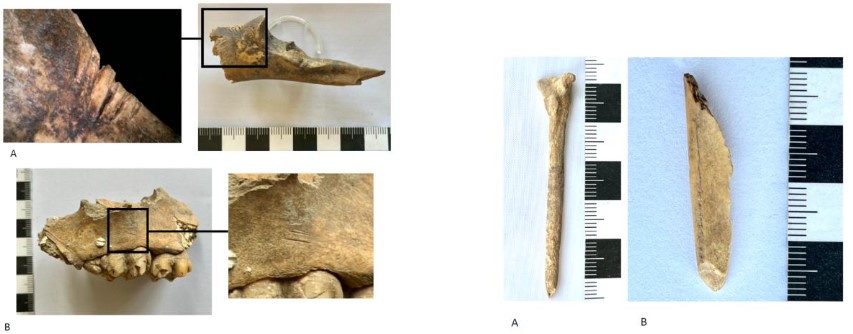
Fig. 17. Example of skeletal elements with butchery marks: A. Caprine ulna (inset: 10x magnification); B. Suid maxilla from Tench 3 (left).Osseous artefacts: A. Complete awl from Trench 3. B. Fragment of a worked bone point or awl from Trench 1D (right).
Two pieces of worked bone fragments were identified in Togolok 1. A complete awl manufactured from a caprine ulna (Fig. 17A) was recovered from Trench 3 and a fragment of a possible awl-type tool (worked, flaked tip with use polish, could also be an osseous point) was recorded from Trench 1D (Fig. 17B). Evidence for carnivore modification, specifically gnawing and pits/punctures, was also recorded in several bone specimens. For example, Fig. 18A shows a cattle subterminal phalanx with a tooth puncture. Fig. 18B, on the other hand, shows a caprine pelvis with tooth punctures as well as evidence of gnawing (i.e., in the fracture edges).
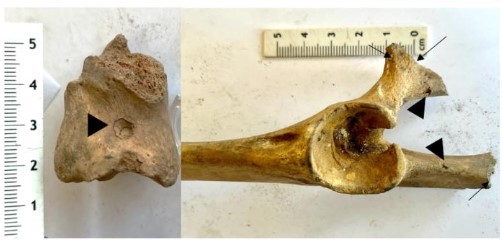
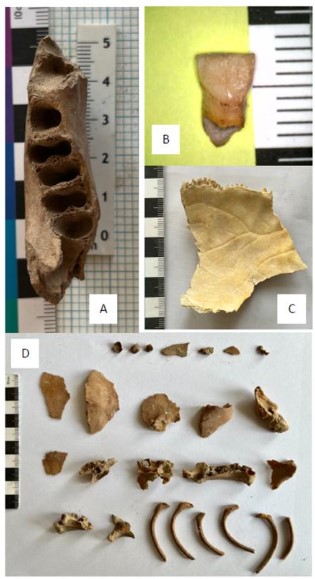
Fig. 18. Examples of bone fragments with carnivore modifications. A. Cattle subterminal (second) phalanx with tooth puncture. Caprine pelvis with toothpits and evidence of gnawing (above). Human remains recovered from Togolok: A. left mandible from Trench 1; B. deciduous incisor from Trench 3; C. fragment of the parietal bone from Trench 2; D. remains of a neonate (below).
The current hypothesis is that dogs are responsible for the observed modifications, which suggests that they were roaming in the Togolok 1 settlement and had access to the accumulating midden/refuse materials. Some of the burnt bone fragments still showed evidence of carnivore modification, in addition to skeletal elements that also display butchery marks. In addition to animal bones, human remains representing a total of four different individuals were also recorded in Togolok 1. A fragment of the left mandible was recorded (Fig. 18A). Initial assessment indicates that the mandible represents a juvenile individual (i.e., less than 10 years old, perhaps around 6 years old) based on the alveoli pattern (i.e., first permanent molar has not yet erupted). A deciduous incisor (Fig. 18B) also representing a very young individual was recorded in Trench 3. Six parietal bone fragments most likely from a singleindividual (one fragment shown in Fig. 18C) were recovered from the fill of Trench 2. At least 25 specimens, including the right and left mandible, fragments of the maxillary, temporal, and zygomatic parietal bones, as well as several ribs representing a neonate were recorded from Trench 2 (Fig. 18D).
PRELIMINARY ANALYSIS OF CERAMIC MATERIAL
The preliminary statistical pottery analysis confirms the presence of a greater percentage of fine, wheel-made ceramics compared to coarse ones in all three trenches. Also noteworthy is the presence of vessels, produced in mixed techniques, in which the ceramic is finished on the lathe after initial processing by hand. The findings from all three trenches indicate the presence of two main macro-groups, similar to what has already been observed in the previous campaigns, which can be divided into coarse and fine ceramics. The first is characterized by coarse impasto grey-black, brown, reddish or orange in colour, with frequent inclusions and porosity. The latter consists of fine – or extremely fine – impasto of light yellowish, grey and orange shades without inclusions. For all the three types of manufacturing, both closed shapes (shapes attributable to jugs, jars, olle, etc.) and open shapes (mostly bowls, cups but also basins) are recorded. Interestingly, two fragments of wheelmade ceramic walls, which belong to two different vessels, present a similar painted striped decoration and a fragment of a strainer, similar to the example identified in the previous campaigns (Fig. 19).
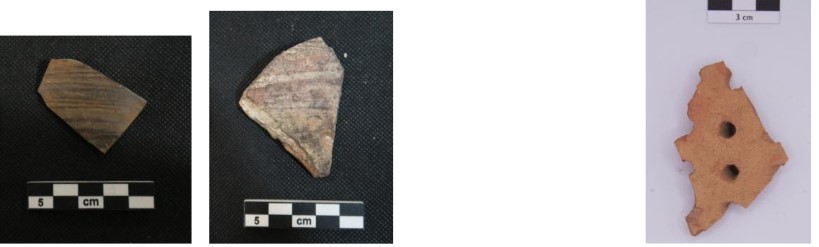
Fig. 19. Fragments of painted pottery from Trench 1 (left); fragment of a strainer from Trench 3 (right).
2024 Objectives
Our goals for the year 2024 are as follows:
| copyright by The Society for the Exploration of EurAsia| E-mail | Home | 
